Friday, February 25, 2011

80% of US college admissions departments check your Facebook Profile


A recent Kaplan survey found that admissions departments at 80% of US top colleges “visit potential students’ online Facebook profiles during their recruiting process.” The obvious advice is to keep your Facebook profile private.

Read more here: Report: 80% of College Admissions Departments Check Applicants’ Facebook Pages | Geekosystem

Monday, February 21, 2011

Geek Hierarchy Chart

Funny geek hierarchy chart: Which geeks consider themselves less geeky than other geeks.
You might also be interested in the Geek Maslow pyramid of needs and the Evolution of Geek.

NY Times Geek Flowchart (Click to Enlarge)
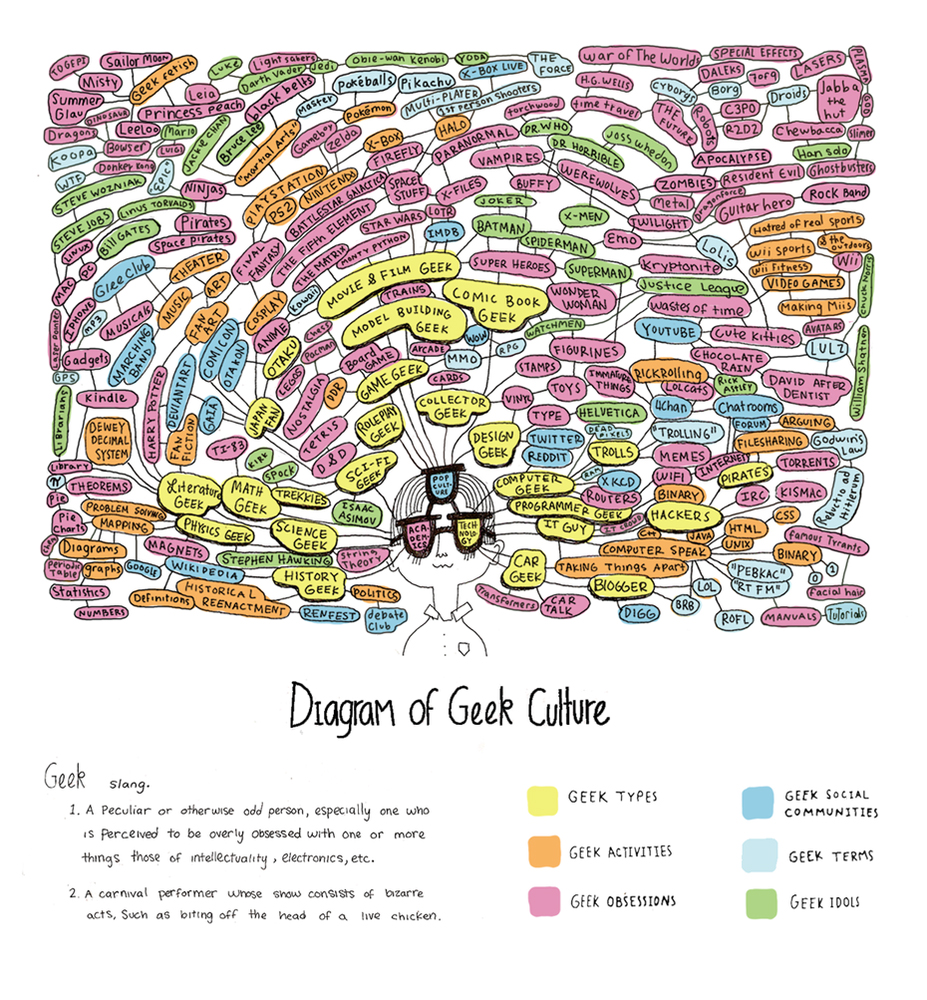
Geek Diagram

The Sacred Order of Geeks
[Source: BCO | Via Geeks are Sexy]

Thursday, February 17, 2011

Map of the Fantasy Worlds


Cartoonist Dan Meth has completed what he regards as the complete map of the Fantasy Universe. I wonder how Dan Meth decided that Wonderland shares borders with Middle earth.
Found here: Map of the Fantasy World | Geekosystem

Wednesday, February 9, 2011

Robots Share Knowledge to Learn from Experience

Dr. Markus Waibel of the Swiss Federal Institute of Technology in Zurich (ETH) believes that what’s holding robots back is their inability to send and receive new information over the internet like humans do. To combat this problem, and hopefully propel robot development in the process, the Swiss team are developing RoboEarth — a repository of data that robots can use to learn new tasks and expand through their own experiences. At its core, RoboEarth is a World Wide Web for robots: a giant network and database repository where robots can share information and learn from each other about their behavior and their environment. RoboEarth is part of the Cognitive Systems and Robotics Initiative from the European Union Seventh Framework Programme.


Read more here: Robots Share Knowledge On Robot Wikipedia RoboEarth | Geekosystem

Monday, February 7, 2011

The Human Radio Bubble in the Milky Way

The first AM radio broadcast was on Christmas Eve, 1906, and the opening ceremony of the 1936 Olympics is regarded as the first video signal powerful enough to be carried into space.


How far did human-generated radio and video signals travel since then? Our radio bubble is about 200 light years (the diameter of the small blue dot in the enlarged section below). Compared to the vast size of the Milky Way (which is just one of many galaxies in the universe), our own presence seems rather insignificant. 


[Click on picture to see it full size.]

Read more here: The Extent of Human Radio Broadcasts in the Milky Way | Geekosystem